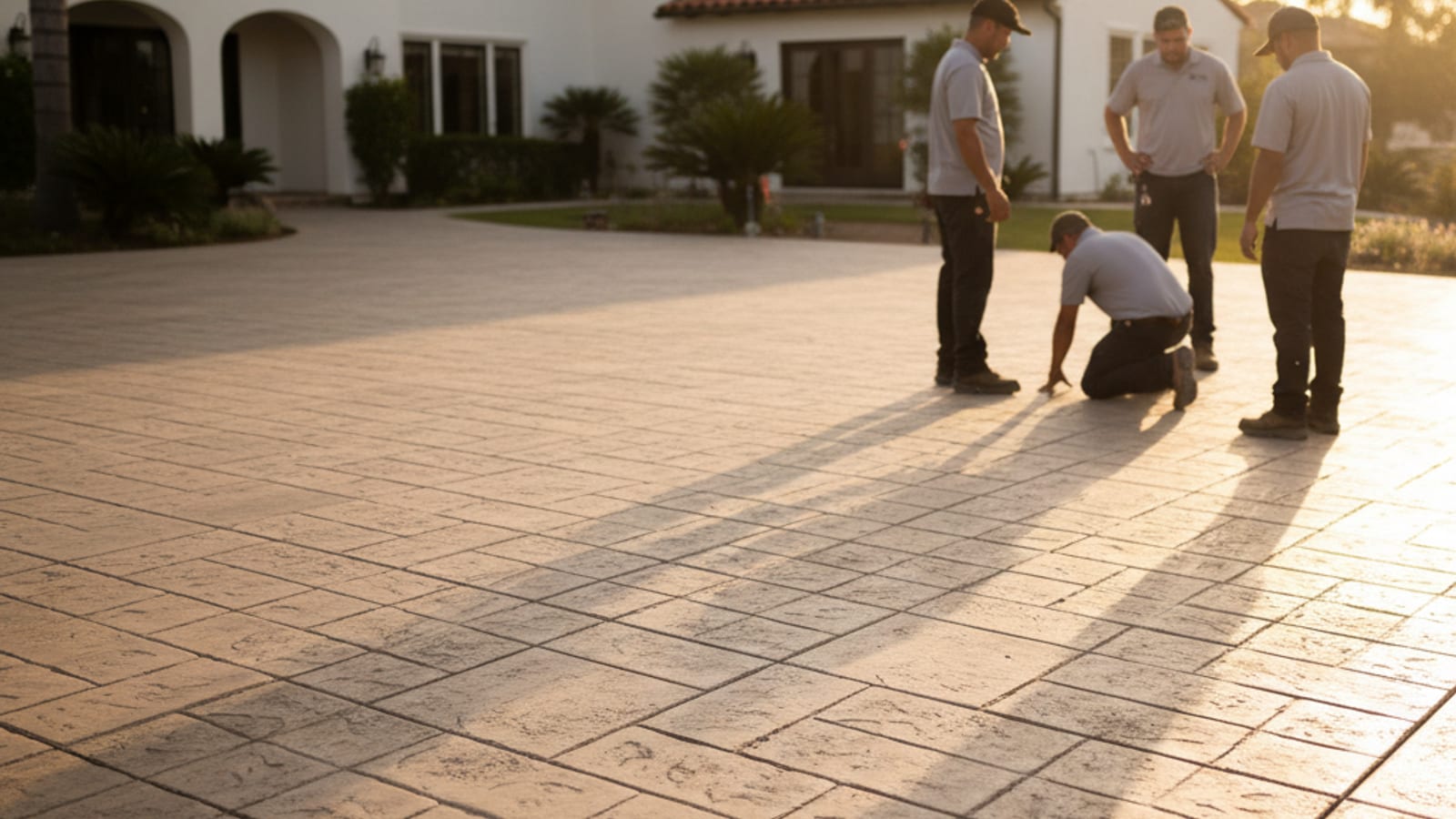
Colored concrete in San Diego runs about $8 to $18 per square foot installed, depending on the method. Integral color mixed into the truck lasts longest here because our sun and coastal salt punish surface-only stains. The bigger question most homeowners miss: our expansive clay soil cracks slabs, and a crack through colored concrete is far more visible than one through plain gray. Color choice and slab engineering have to work together.
Here is how color actually works, what it costs in 2026, and what San Diego conditions do to it over time.
The four ways to color concrete
Color comes from four methods, and they age very differently. This is where most national guides stop. They do not account for what 280 sunny days and salt air do to each one.
Integral color is pigment mixed into the concrete at the truck before the pour. The whole slab is colored top to bottom. As the surface wears, the color stays consistent because there is no thin colored layer to wear through. This is the one to insist on for driveways, patios, and anything in full sun.
Color hardener is a dry pigment broadcast onto the wet surface and floated in. It gives a denser, richer, more wear-resistant top layer than integral alone. Often paired with integral color for depth. Common under stamped work.
Acid and water-based stains react with or sit on the cured surface. They produce beautiful mottled, variegated looks. The catch: they only color the top fraction of an inch. Once that wears, gray shows through. Fine for low-traffic patios. A poor choice for driveways.
Dyes and paint are the cheapest and the shortest-lived. Dyes fade fast in UV. Paint peels. Skip both for any outdoor San Diego surface that sees sun.
For a deeper look at the stamped finishes that pair with these colors, see our guide to stamped concrete patterns that work for San Diego homes.
What colored concrete costs in San Diego (2026)
Installed pricing, including the base slab, by method:
| Method | Cost per sq ft | Best for |
|---|---|---|
| Integral color only | $8 to $12 | Driveways, patios, full sun |
| Integral plus color hardener | $10 to $14 | High-traffic, richer tone |
| Acid or water-based stain | $9 to $15 | Low-traffic patios, accents |
| Stained over existing slab | $4 to $8 | Refreshing sound old concrete |
| Stamped plus integral plus release | $16 to $28 | Premium decorative surfaces |
A 400 square foot integral-colored patio lands around $3,200 to $4,800. The same area in premium stamped-and-colored runs $6,400 to $11,200. We quote flat-rate, so the number in your bid is the number you pay.
Why our pricing sits a touch above some national averages: San Diego concrete almost always needs more rebar and a thicker, better-prepped base because of the soil. That cost is real, and skipping it is how you get a cracked, two-tone slab in three years.
What San Diego does to colored concrete
This is the part the national guides cannot tell you. Four local forces shape how your color ages.
Expansive clay soil. Much of the county sits on clay that swells when wet and shrinks when dry. That movement heaves and cracks slabs. A crack through gray concrete is annoying. A crack through deep charcoal or terra cotta is obvious from the street. Proper base prep, control joints, and rebar matter more on a colored slab because the failure shows. If you are unsure whether your pour needs steel, read do I need rebar in my driveway.
Coastal salt and UV. Homes in Coronado, La Jolla, Encinitas, and the coastal strip get salt fog that attacks sealers and, once the sealer fails, the color underneath. Inland yards in El Cajon, Santee, and Escondido see brutal afternoon UV that fades cheap pigment fast. Both problems trace back to the same fix: a UV-stable pigment and a sealer rated for the exposure.
Drought and water. Long dry spells shrink clay soil hard, then the first heavy rain swells it. That swing stresses slabs. It also means your color sees long stretches of unbroken sun.
The pigment quality issue. The color that fades fastest is cheap iron-oxide pigment in direct sun. The color that holds is a higher-grade UV-stable pigment from a known supplier like Davis, Solomon, or Increte. When we bid colored work, we name the integral color number and the supplier. If a contractor will not, you do not know what you are buying.
Permits, Title 24, and HOA rules
A colored finish itself does not change your permit situation. The slab underneath might.
New flatwork like patios and walkways at grade usually does not need a permit in unincorporated San Diego County or the City of San Diego. Add a footing, a structural element, or a retaining wall, and it does. Drainage that pushes water toward a neighbor or a slope can also trigger review. Our retaining wall permit guide covers where that line sits.
Title 24 is California’s energy code. It rarely touches residential flatwork, but light-colored concrete near a home can count toward cool-surface and reflectance goals on some projects. Worth knowing if you are doing a larger remodel.
HOAs are the real gatekeeper for color. Many San Diego HOAs restrict driveway and visible hardscape colors to an approved palette. Get written approval on your exact color number before the pour. Concrete color is not something you change after it cures.
Which colors hold up best here
Earth tones age best in San Diego light. Terra cotta, sand, warm tan, soft brown, and graphite all wear gracefully and hide the inevitable surface dust and pollen. They also flatter the Spanish, Mediterranean, and coastal architecture common across the county.
Deep, saturated colors like rich charcoal, true black, or bright red look great on day one and show every flaw later: efflorescence, fading, and any crack. If you want a dark slab, commit to the maintenance: reseal on a tight cycle and accept some patina.
Whatever color you pick, sealing is what keeps it alive. Reseal every 2 to 3 years, tighter on the coast. Our breakdown of which sealer to use walks through penetrating vs film-forming for colored surfaces.
Frequently asked questions
Does colored concrete fade in San Diego sun? Cheap dyes and stains fade fast. Integral color with a UV-stable pigment and a maintained sealer holds its tone for decades. The fade you see on old colored patios is almost always a missed reseal cycle or a low-grade pigment.
Is integral color or stain better for a driveway? Integral color, without question. A driveway sees tires, sun, and traffic. Stain only colors the surface and wears through. Integral runs the full depth of the slab.
Can I add color to my existing concrete? Yes, with a stain or dye on a sound, clean slab, roughly $4 to $8 per square foot. It will not last as long as integral on a new pour, but it is a real refresh for concrete in good shape. We will tell you honestly if your slab is too far gone to be worth it.
Will colored concrete hide cracks? No. It makes them more visible than gray does, especially in dark tones. That is exactly why the base prep and rebar matter so much on a colored slab in clay soil.
Do I need a permit for a colored patio? The color does not require one. Flatwork at grade usually does not either, but footings, walls, and drainage changes can. We flag permit needs during the estimate so nothing stalls.
What does colored concrete cost compared to pavers? Integral-colored concrete runs $8 to $14 per square foot. Pavers run $20 to $40 installed. Colored concrete wins on cost and on weed-free, settling-free durability.
Get a colored concrete estimate
We quote colored concrete across San Diego County, with sample boards so you see the actual tone before you commit. We name the pigment, account for your soil, and give you a flat-rate price within 48 hours. Call (858) 925-5546 or use the contact form to set up an onsite estimate.